Japanese KitKats: The Story Behind Their Unusual Flavours
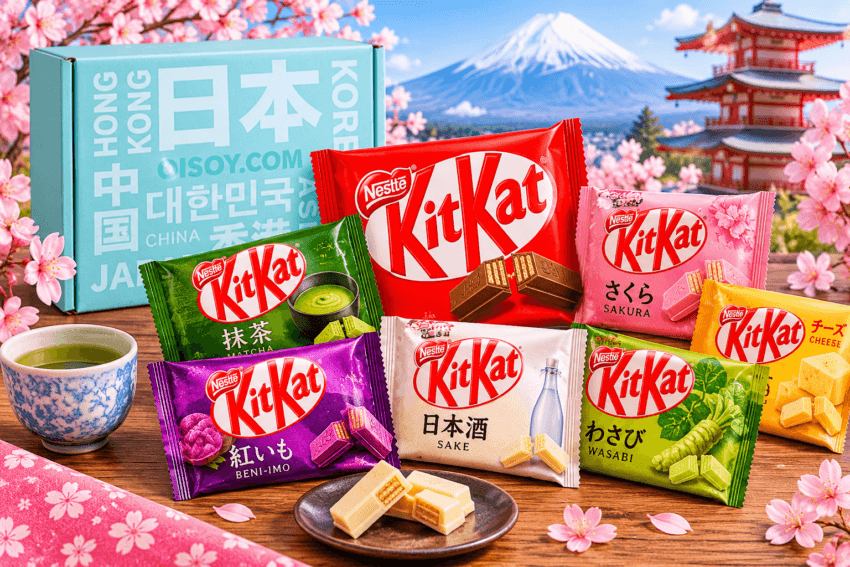
Japanese KitKats have become something of a phenomenon among chocolate lovers, collectors and adventurous snack enthusiasts. From traditional matcha and delicate sakura to wasabi, sake and purple sweet potato, Japan has transformed an ordinary chocolate bar into a playground for some wonderfully unexpected flavours. But how did a British chocolate bar become such a big part of Japanese snack culture, and what inspired its extraordinary collection of varieties? The story is more interesting than you might think.
The humble beginnings: A British chocolate bar is born
Believe it or not, the story of KitKat begins in Yorkshire, England, not Japan.
In 1935, British confectionery company Rowntree’s introduced a new chocolate-covered wafer bar called Rowntree’s Chocolate Crisp. Developed at the company’s factory in York, the idea reportedly came from an employee who suggested making a chocolate bar that workers could easily carry in their packed lunches.
The result was a simple but clever combination: layers of crispy wafer covered in smooth milk chocolate, divided into four easy-to-break fingers.
Although the snack was an immediate success, its original name wasn’t particularly memorable. In May 1937, Rowntree’s rebranded it as KitKat Chocolate Crisp, introducing the name that would eventually become recognised around the world.
Interestingly, the name KitKat actually predates the chocolate bar. Rowntree’s had registered the Kit-Cat and KitKat names in 1911 and had already used them for boxed chocolate assortments. The name is associated with the historic Kit-Cat Club in London, whose name came from pastry cook Christopher Catling.
The famous advertising slogan, “Have a break, have a KitKat”, arrived in 1958, cementing the chocolate bar’s association with taking a little time out of a busy day.
During the Second World War, milk shortages forced Rowntree’s to change the original recipe. The chocolate became darker, and the familiar red packaging was replaced with blue to signal that the product was different. Once supplies recovered, the red wrapper returned.
In 1988, Swiss food company Nestlé acquired Rowntree’s, bringing KitKat into the global confectionery portfolio we know today.
How KitKat found its way to Japan
KitKat arrived in Japan in 1973, following a licensing agreement between British confectioner Rowntree-Mackintosh and Japanese company Fujiya. Fujiya began producing and selling the chocolate bar locally, before Nestlé and Fujiya established a joint venture in 1989.
Initially, KitKat was marketed as an exotic British import. Its appeal was partly built around the idea of enjoying a little taste of British culture.
However, competing against Japan’s established confectionery brands wasn’t easy. KitKat needed to find a way to appeal to Japanese consumers on their own terms.
That breakthrough came around the turn of the millennium.
In 2000, Nestlé introduced a strawberry-flavoured KitKat in Japan. It was a significant departure from the traditional milk chocolate version and marked the beginning of the brand’s remarkable Japanese flavour evolution.
Then came an idea that would transform KitKat into one of Japan’s most recognisable souvenir chocolates: regional flavours.
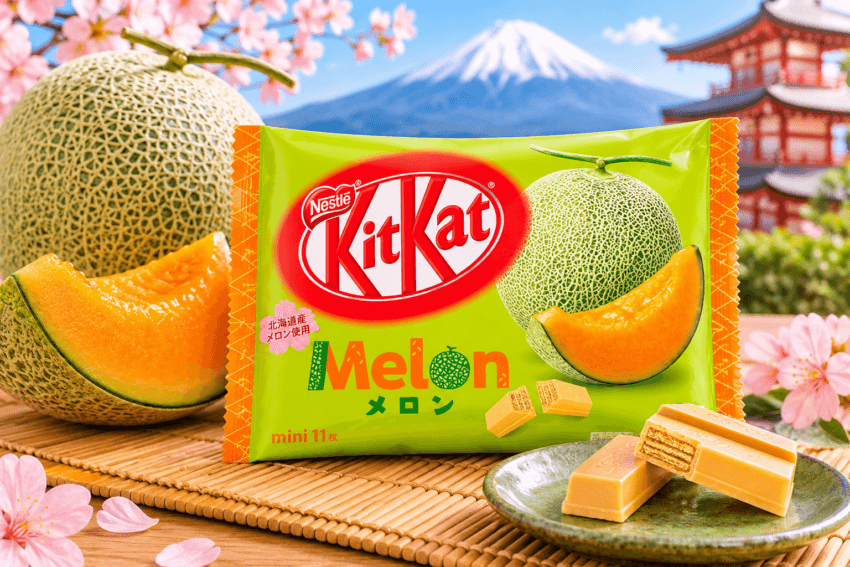
In 2002, Nestlé launched its Yubari Melon KitKat, inspired by the famous melons grown in Hokkaido, Japan’s northernmost main island. It became the starting point for the regional KitKat collection, with flavours celebrating ingredients and specialities associated with different parts of the country.
Instead of simply selling another chocolate bar, Nestlé had created something people could take home from their travels, share with friends and give as a gift.
By November 2022, Nestlé Japan reported that more than 400 different KitKat varieties had been released over the years. That’s quite a lot of chocolate experimentation!
Why KitKat became a lucky charm in Japan
There is another reason KitKat became so popular in Japan, and it has nothing to do with chocolate.
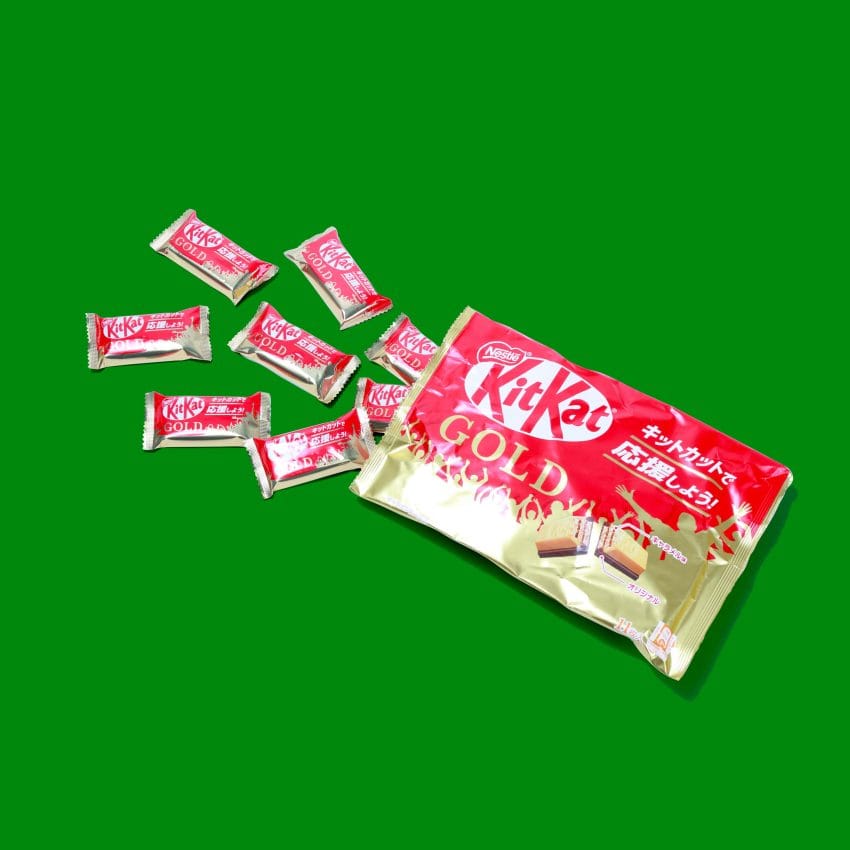
The name sounds remarkably similar to the Japanese expression “kitto katsu”, which can be translated as “you will surely win”.
Around 2002, this similarity began catching on among students in the southern Japanese region of Kyushu. Young people started giving KitKats to friends preparing for important school entrance examinations as a little good-luck gift.
The tradition spread through word of mouth, eventually becoming a familiar part of Japan’s examination season. Parents, teachers and friends began giving KitKats to wish students success.
Nestlé recognised the cultural significance of this association and embraced the idea of KitKat as a way to communicate encouragement, gratitude and good wishes.
It is a lovely example of how a familiar product can take on a completely different meaning when it becomes part of another country’s culture.
Some of Japan’s most unusual KitKat flavours
So, what happens when you give confectionery developers a familiar chocolate bar and the opportunity to experiment with the flavours of an entire country?
Quite a lot, as it turns out.
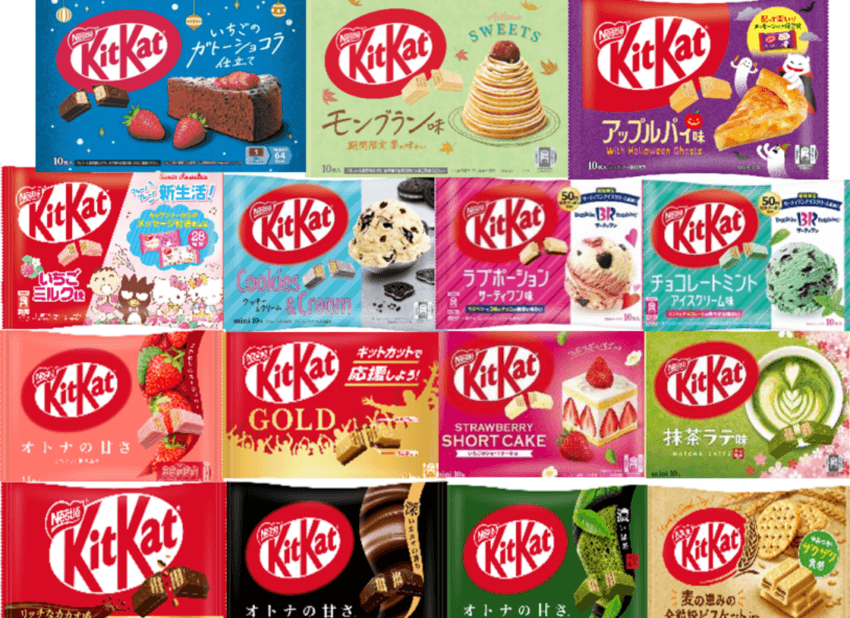
Japanese KitKats have featured everything from traditional Japanese ingredients to regional delicacies and flavours inspired by familiar desserts. Here are some of the most interesting examples.
1. Matcha green tea: The flavour that started a global craze
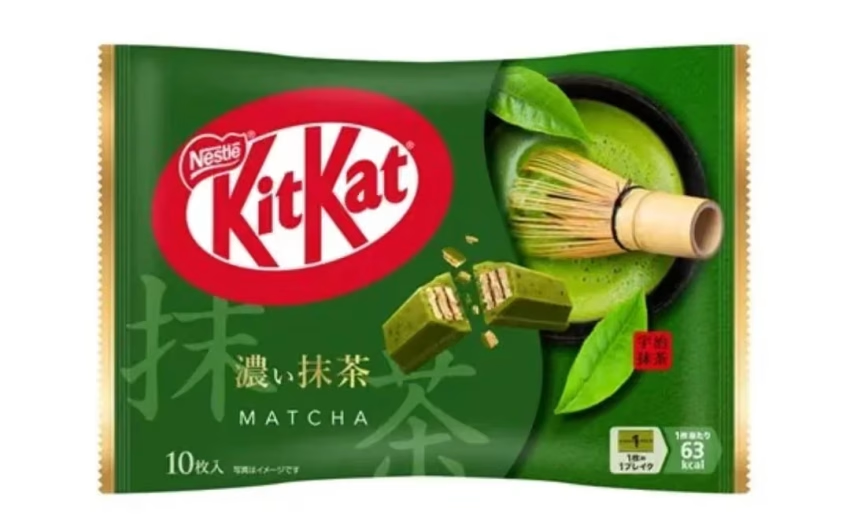
If there is one Japanese KitKat flavour that has become internationally famous, it is matcha.
The original KitKat Uji Matcha launched in 2004, using green tea from Uji, Kyoto, an area renowned for its tea production.
But developing a matcha chocolate wasn’t quite as simple as adding tea flavouring to a regular KitKat. Nestlé introduced a new technique that allowed matcha powder to be mixed directly into the chocolate, creating a distinctive flavour and colour.
The result was a huge success.
Matcha’s slightly bitter, earthy taste works surprisingly well alongside the sweetness of chocolate. It offers something a little more sophisticated than the traditional milk chocolate version, without losing the familiar crispy wafer centre.
The success of the original flavour led to numerous variations, including matcha with different concentrations of green tea and combinations with other ingredients.
In 2019, Nestlé even introduced a Japanese-inspired Green Tea Matcha KitKat to European markets, following years of requests from fans who wanted to try the famous flavour outside Japan.
2. Wasabi: Chocolate with a surprising kick
Wasabi is probably not the first ingredient that springs to mind when you think about chocolate.
Best known as the fiery green condiment served alongside sushi, wasabi has a distinctive heat that makes it one of Japan’s more adventurous culinary ingredients.
Yet it has also found its way into KitKat.
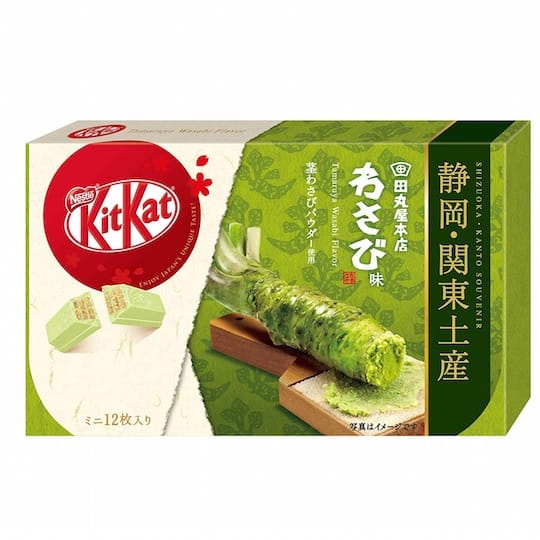
The Japanese wasabi KitKat celebrates Shizuoka, a region famous for its wasabi production. The current regional version is made using authentic Japanese wasabi supplied by Tamaruya Honten, a Shizuoka company founded in 1875.
Wasabi stem powder is incorporated into the product, combining its characteristic spiciness with the sweetness of the chocolate.
It might sound like an unusual pairing, but Japan’s approach to flavour development often involves balancing contrasting tastes rather than simply making something sweet.
Would you be brave enough to try it?
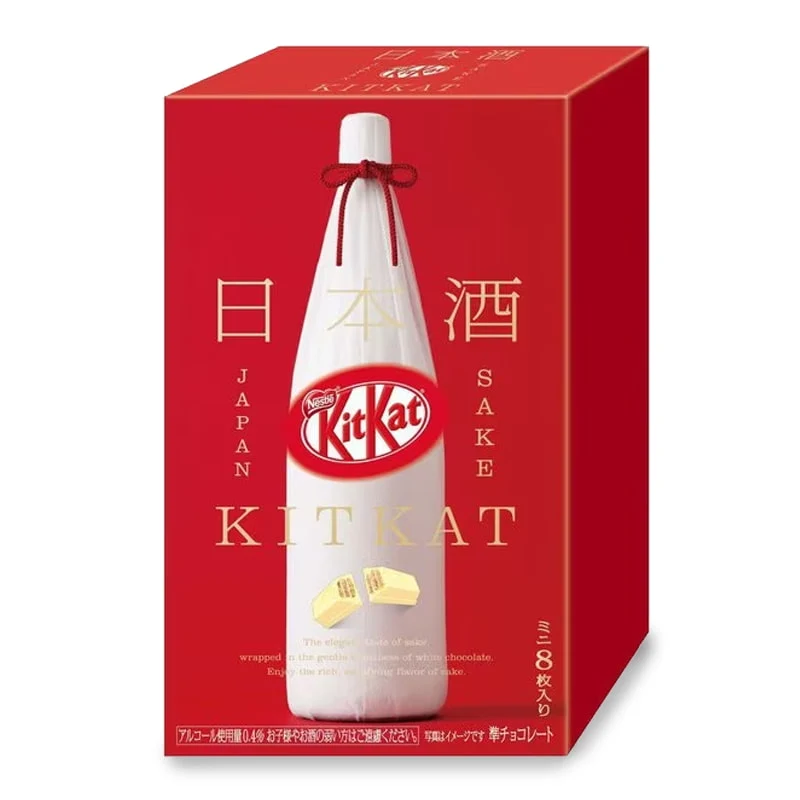
3. Japanese sake: A chocolate bar with a little alcohol
Next up is a KitKat that brings a rather grown-up twist to chocolate.
Japanese sake, traditionally brewed from fermented rice, has inspired one of the country’s more distinctive KitKat varieties.
The sake KitKat uses powdered sake from Masuizumi, a brewery in Toyama Prefecture. The powder is blended into the cream, recreating the delicate aroma and rice-like character of the traditional Japanese drink.
The result is more subtle than you might expect, with an emphasis on fragrance and flavour rather than a strong alcoholic taste.
There is also an Ume Sake version, inspired by Japanese plum wine (umeshu). This variety uses powdered umeshu from Wakayama’s Umeshu Tsurubai, bringing together the rich aroma of ripe plums and a gentle sweet-and-sour taste.
One important detail: these are not necessarily alcohol-free treats. Nestlé’s current regional product information lists the sake version at 0.5% alcohol and the Ume Sake version at 0.2%.
Definitely something to check before sharing with younger snack enthusiasts!
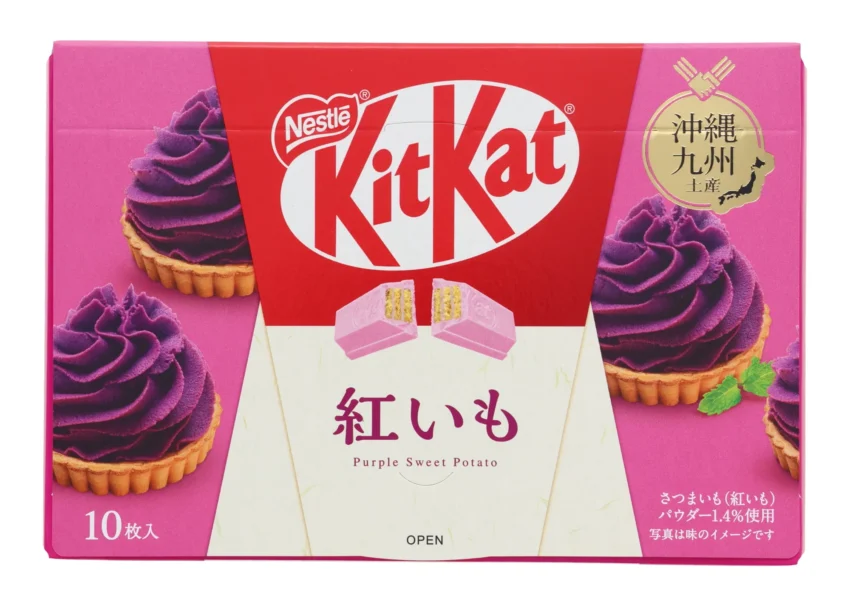
4. Purple sweet potato: A taste of Okinawa
One of the most visually striking Japanese KitKats takes inspiration from Okinawa, the tropical island region in southern Japan.
The ingredient in question is beni-imo, a variety of purple sweet potato particularly associated with Okinawa.
Known for its vivid purple colour and naturally gentle sweetness, beni-imo is widely used in Okinawan desserts, pastries and other local treats.
The KitKat version incorporates purple sweet potato powder, giving the chocolate its inspiration from this distinctive regional ingredient.
Unlike some of the more experimental flavours, this one actually makes a lot of sense. Sweet potato already works beautifully in desserts, and its mellow sweetness pairs naturally with chocolate.
Plus, that purple colour makes for a rather eye-catching snack!
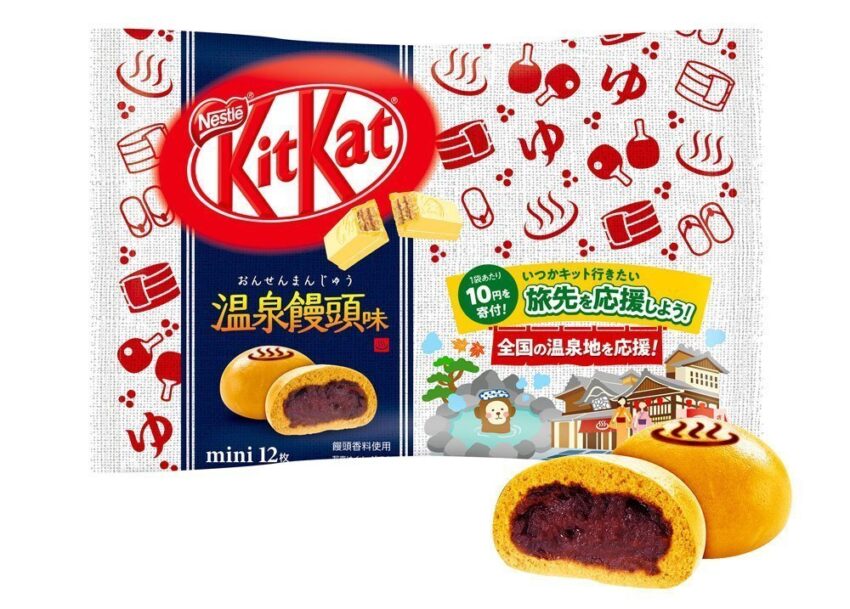
5. Onsen Manju: Inspired by Japan’s hot spring resorts
This one is particularly interesting because the inspiration comes from a traditional Japanese sweet rather than an individual ingredient.
Onsen manju are small steamed buns commonly enjoyed at Japanese hot spring resorts. They are traditionally filled with sweet red bean paste and are a popular souvenir for visitors.
In 2018, Nestlé introduced a KitKat Onsen Manju flavour, specifically designed for sale around Japanese hot spring destinations.
Rather than simply adding a manju flavouring, the developers attempted to recreate the appearance and taste of the traditional sweet.
The chocolate coating was shaped and coloured to resemble the lightly brown exterior of an onsen manju bun, while the wafer centre was combined with a cream containing red bean powder.
Even the packaging was designed with hot spring visitors in mind, featuring 14 different illustrations of Japanese cat characters enjoying their relaxing breaks.
It’s a brilliant example of how Japanese KitKats can capture not just a flavour, but an entire experience associated with a particular destination.
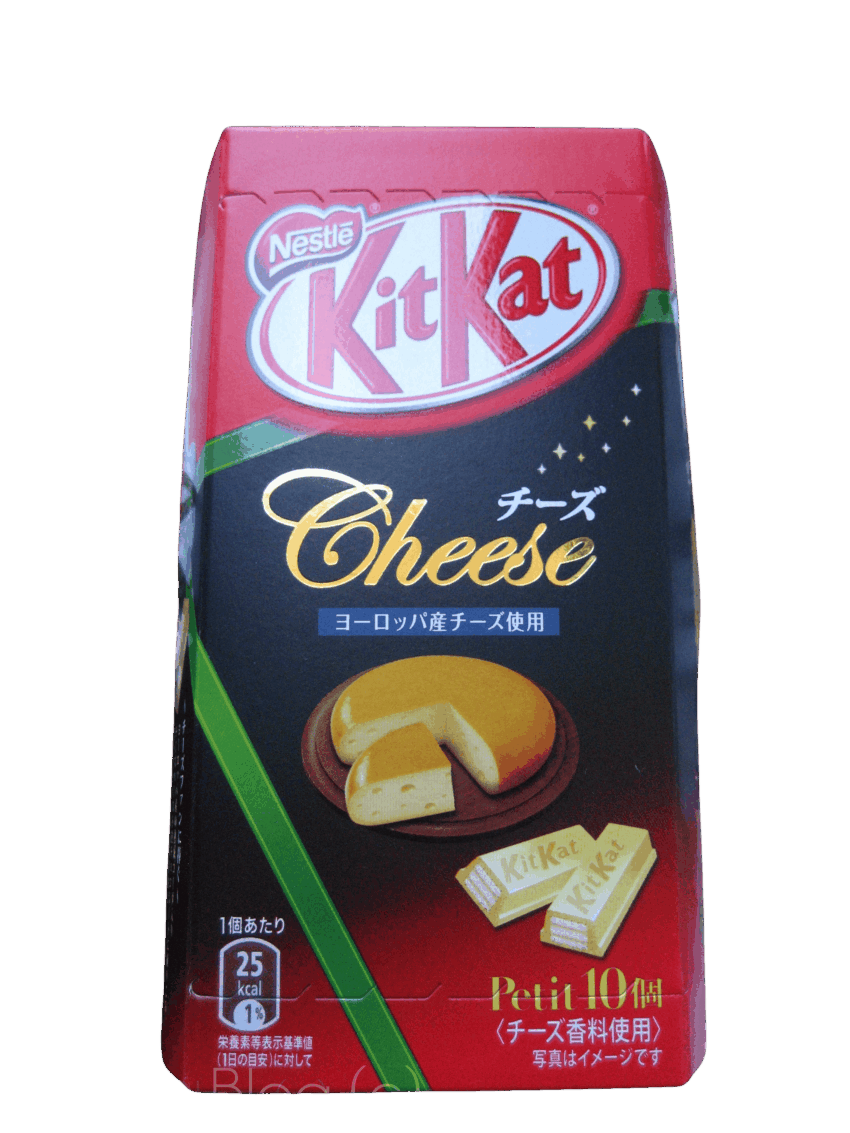
6. European Cheese: When chocolate takes an unexpected turn
Not every unusual Japanese KitKat is inspired by a traditional Japanese ingredient.
One of the more surprising varieties released in Japan was European Cheese.
Yes, cheese and chocolate in the same snack!
The flavour was part of the wider collection of experimental limited-edition KitKats, which also included varieties such as cinnamon cookie, purple potato and bean cake.
These flavours demonstrated that Nestlé was willing to experiment well beyond conventional chocolate combinations, using KitKat as a platform for interesting and sometimes unexpected tastes.
Whether you would consider cheese and chocolate a match made in heaven or a culinary experiment too far is another matter!
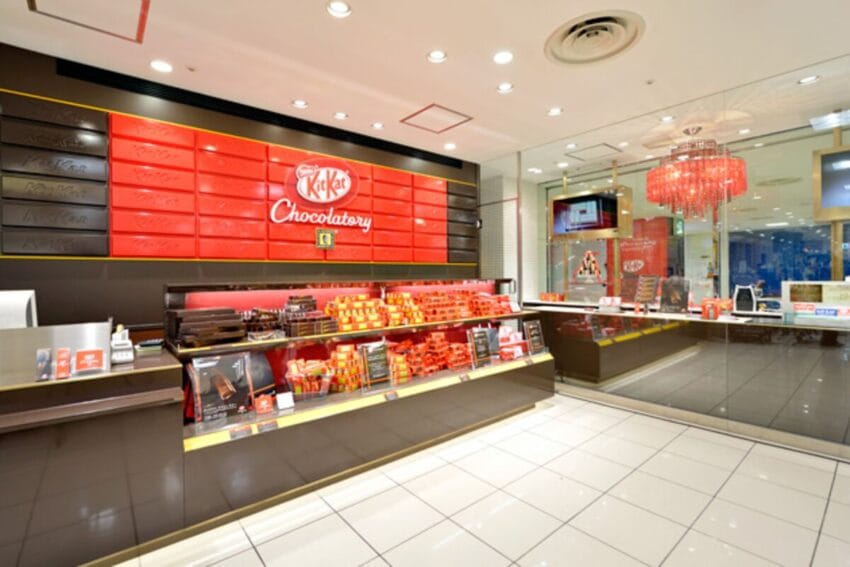
The rise of KitKat Chocolatory: Taking chocolate experimentation further
Japan’s enthusiasm for unusual KitKat flavours eventually led to something even more ambitious.
In 2014, Nestlé opened the world’s first KitKat Chocolatory boutique in Tokyo’s Ikebukuro district.
Developed in collaboration with Japanese chocolatier and pastry chef Yasumasa Takagi, the concept took KitKat into more premium territory.
Rather than simply producing another collection of novelty flavours, the Chocolatory focused on carefully developed ingredients, more sophisticated combinations and beautifully presented products.
The initial collection included Sublime Bitter, Special Sakura Green Tea and Special Chilli.
The idea proved popular, and the Chocolatory became a platform for further experimentation. Over the years, products have included more unusual ingredients and premium chocolate varieties, including ruby chocolate and even chocolate made using powdered white cacao fruit pulp.
It demonstrated that KitKat could be much more than an everyday supermarket chocolate bar.
More than just a chocolate bar
Today, Japanese KitKats have become famous around the world for their extraordinary range of flavours, colourful packaging and limited-edition releases.
But what makes them particularly interesting is the thinking behind them.
Some celebrate regional ingredients, others recreate traditional sweets, while some are simply opportunities for confectionery developers to experiment with unexpected flavour combinations.
They also reflect aspects of Japanese culture, from the importance of seasonal and regional souvenirs to the tradition of giving small gifts to wish someone good luck.
And perhaps that is the secret to their success. A simple British chocolate bar has been transformed into a way of exploring Japan, one flavour at a time.
At Oisoy, we love discovering the stories behind Asian snacks and the little surprises that make them so much fun. After all, you never quite know what you might discover when you unwrap something new!
Japanese KitKat’s regularly feature in our Asian snack boxes, which you can subscribe to or purchase individually.